● Tamatave · Madagascar — Building since 2026
Better chicken
at a fair Malagasy price.
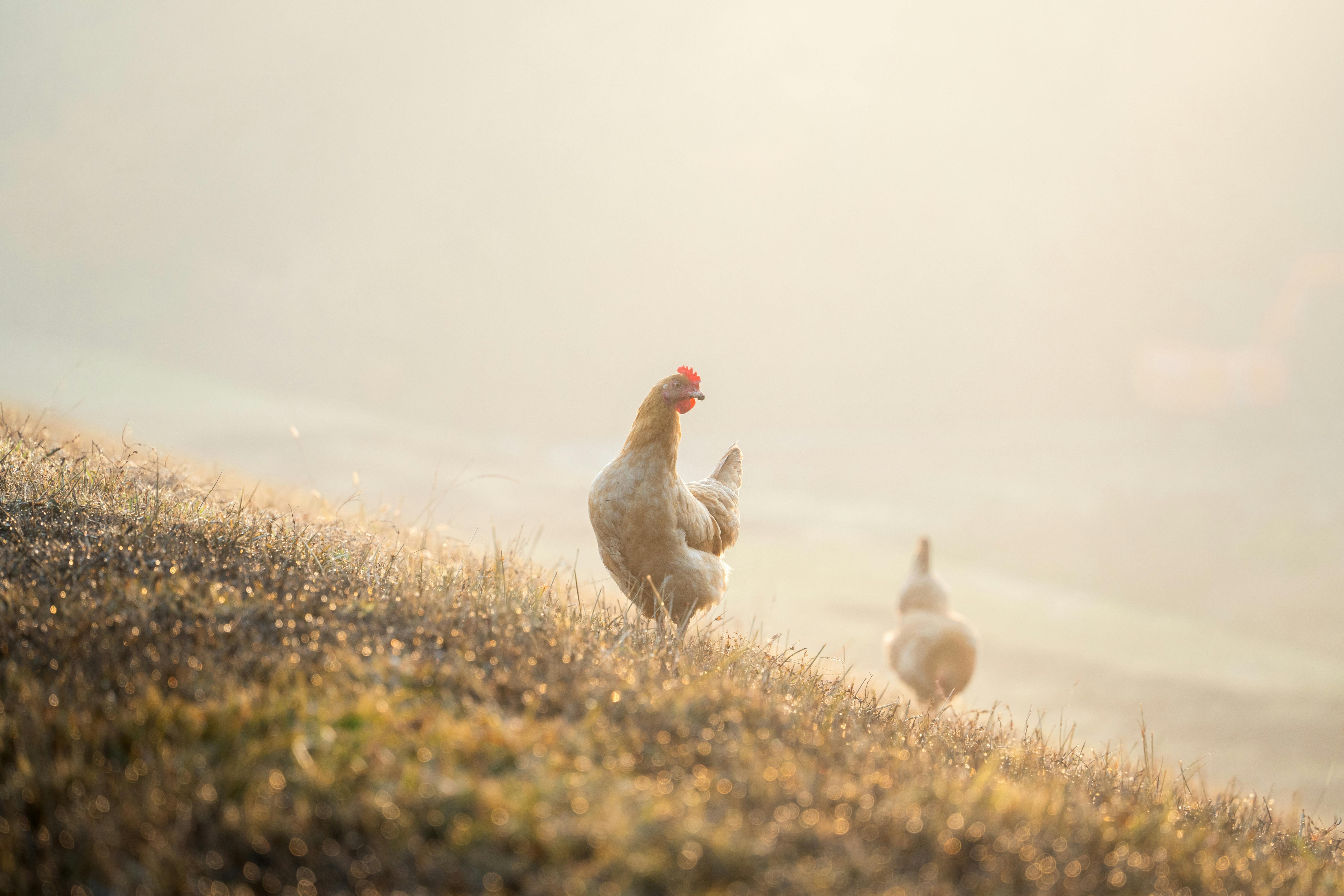
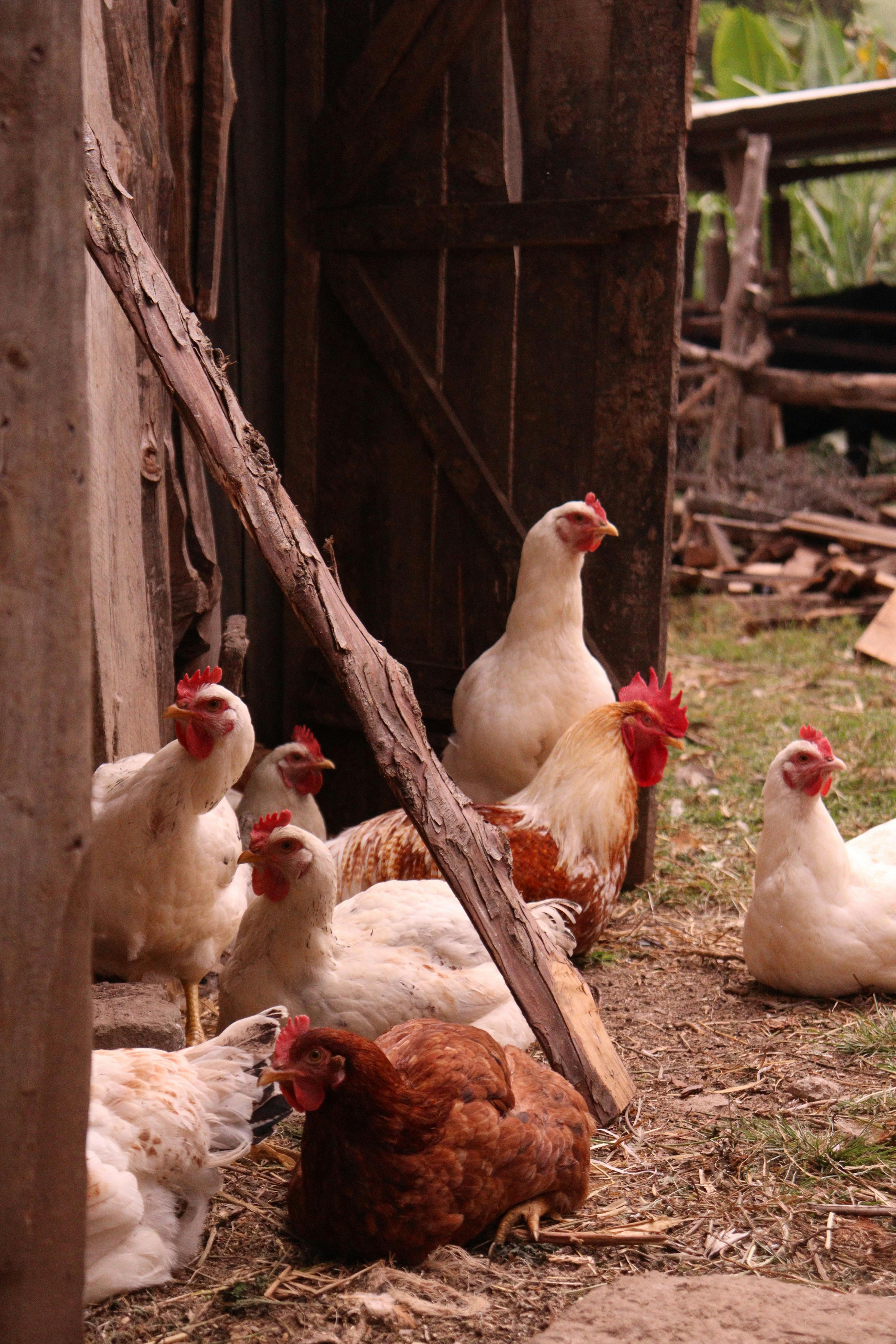
FIG. 01 — Morning, Fanandrana
Madagascar earns local wages and pays international prices for chicken.
United Kingdom Reference
15 min
of work, at average wage, buys a kilogram of supermarket chicken in Britain today.
Madagascar Today
2 hr 14
of work, at average wage, for the same kilogram. Same product. Roughly the same price tag. The wages don’t match.
Local chicken price
13,000 – 25,000 Ar/kg
Tamatave market, May 2026
UK equivalent
£5 – 7 /kg
Major retailer average
Wage gap
7× difference
250 000 Ar vs £1,700/mo
One farm, four production systems, closed loops.
Our model brings together four production systems on a single 10,000 m² plot in Fanandrana, near Tamatave. The point of the integrated design is feed cost — feed is 60–70% of what it takes to raise a chicken. If we produce a meaningful share of our protein on-farm at near-zero cost, the price the customer pays comes down without compromising quality.
The closed loop
chicken manure → feeds the ponds → pond water feeds the beds → the beds feed the chickens
01 · Production
Twelve broiler houses
384 birds per house at 4 birds per m². 2,000 birds a month at full capacity.
Scale12 × 96 m²
02 · Production
Six layer houses
Eggs introduced in Year 2. Same module, different breed, separate run.
Year2026 — 2027
03 · Feed
Integrated feed production
Black soldier fly larvae, tilapia ponds for on-farm fish meal, azolla beds.
Target40% on-farm
04 · Soil
JADAM no-till beds
Growing forage and supplemental feed crops, fertilised by the system itself.
MethodJADAM · Korean natural farming
Twenty identical
houses, one blueprint.
The same blueprint is what makes the next thirty farms possible. Once it works here, we can fund cooperative farmers to build the same module on their own land and repay the infrastructure cost from production.
16 × 6 m
96 m²
384 birds
4 birds/m²
Mono-pitch
Deep litter
A serious build, not a finished product.
We’re in the test phase — a trial flock is on site while the first modules go up. The team on the ground is small and growing. Here’s where things stand.
May 2026
Trial flock crosses day 60, weights tracking expected.
Average liveweight 1.42 kg, mortality 2.1%. Feed conversion 1.78. First grain harvest from the JADAM beds went into the layer mix.
May 2026
Houses 01–04 going up; concrete poured on slab 02.
Local team of seven on site. Mono-pitch trusses pre-fabricated in Tamatave to keep the module repeatable.
Apr 2026
Tilapia ponds stocked. Fish meal trial begins in June.
Two 80 m² ponds. Manure sluice from house 01 will feed pond 1 once the flock moves in. Pond water diverts to JADAM beds at week six.
Apr 2026
New head of farming operations joined.
Six years at Cooperative Antsiranana. Runs the day-to-day on site and is our point of contact for the cooperative network.
One farm well.
Then we replicate it.
Now
Y01
First farm operational
500 birds/month ramping to 2,000. Trial flock + module 01 commissioning.
2026
Next
Y02
Layer houses introduced
Eggs added. Feed self-sufficiency tested at scale across both houses.
2027
Y03
Second site or first cooperative
Blueprint replicated off-site. First cooperative farmer signs on.
2028
Y04
Network begins
Three to five farms in the network. Shared logistics, shared feed.
2029
Goal
Y05
≈ 30 farms, 100K+ birds/yr
Cooperative network of farmers, one blueprint, one supply chain.
2030
Meva.
/ˈme.va/ · adj.
From the Malagasy
“Meva means good, well, pleasant. It’s what we want the food to be. It’s what we want the work to be for the people doing it. And it’s what we want the price to feel like.”
Raised slow, fed well, finished honest.
A fair wage and a clean shift on the team.
Within reach of a Tamatave kitchen, every week.